Jyoni Shuler / Wikimedia Commons
Why It Matters
Idaho homeowners have long pushed back against rising property tax bills, and the Idaho Republican Party moved to formalize that frustration into official party policy at its state convention. But the proposal to eliminate property taxes entirely comes with a significant financial question: Idaho counties distributed more than $404 million in property taxes to public schools in fiscal year 2025 alone, and critics say no clear replacement plan exists for that revenue.
What Happened
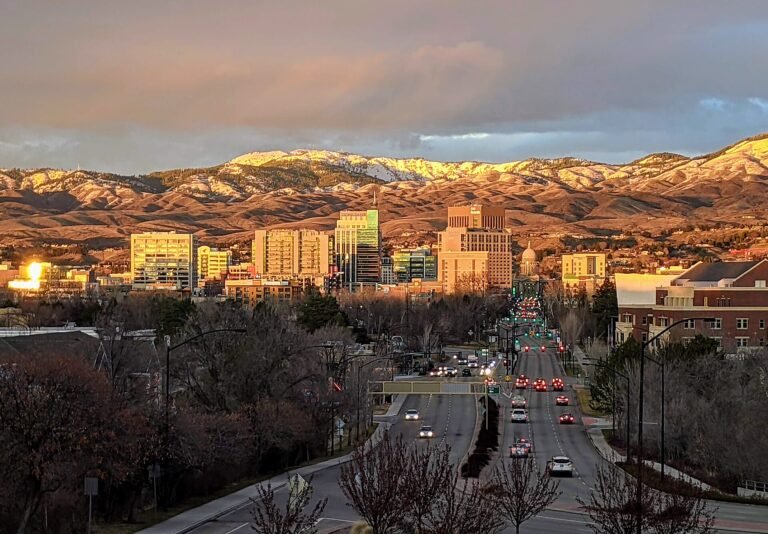
At the Idaho GOP State Convention on June 24, 2026, delegates voted by a wide margin to add a property tax elimination plank to the party platform. State Sen. Scott Herndon, who defeated incumbent Sen. Jim Woodward in the May Republican primary, led the push for the new plank.
The platform language calls for eliminating property taxes and replacing them with “revenue sources that do not place a lien on a citizen’s home.” Herndon has been explicit that his approach does not involve raising sales or income tax rates, relying instead on organic state economic growth to generate sufficient new revenue over time. He also proposes shifting school funding entirely to state tax revenue and allowing individual school districts to create local-option sales taxes for capital projects.
The vote was conducted by a standing count. Of roughly 600 delegates in attendance, approximately 475 — about 80 percent — rose in support, giving the plank a commanding endorsement from the party’s grassroots base.
By the Numbers
- $404.4 million — property taxes levied and distributed by Idaho counties for public schools in FY 2025
- 80% — approximate share of convention delegates who voted in favor of the platform plank
- 600 — total delegates attending the convention
- $1.5 billion — size of the School Modernization Facilities Fund created in 2024, distributed to districts over 10 years
- 2 — major property tax relief measures already passed by the legislature in recent years, in 2023 and 2024
The Funding Gap Question
The central challenge for Herndon’s proposal is replacing more than $400 million in annual school funding without new taxes. Herndon has argued that economic growth can organically generate the needed revenue, drawing comparisons to large-scale national ambitions to make the case that bold policy goals are achievable.
“Was going to the moon realistic?” Herndon said in defense of the plan. “Humans are capable of doing anything they set their minds to.”
House Minority Leader Ilana Rubel, D-Boise, was sharply skeptical. “Maybe money will magically appear, and we’ll be fine,” she said. “That is not a budget plan. That’s preposterous.”
The Idaho Legislature had already taken incremental steps on both property tax relief and school facilities funding before the convention vote. A 2023 measure created the School District Facilities Fund based on average daily attendance, and a 2024 law established the $1.5 billion School Modernization Facilities Fund, making money available to districts over a decade. Herndon’s convention plank would go significantly further than either of those efforts.
Zoom Out
Property tax relief has become a major issue across the Mountain West as home values climbed sharply over the past several years, putting pressure on long-time residents whose tax bills rose alongside their assessed property values. Idaho is not alone in grappling with this — neighboring states have pursued various approaches including homestead exemptions, assessment caps, and circuit-breaker credits.
What sets Idaho’s new party platform position apart is the scope: full elimination rather than relief or reform. Whether that platform language translates into legislation during the next session remains to be seen. Idaho’s May primary season, in which Herndon himself unseated an incumbent senator, demonstrated that property tax frustration carries real electoral weight with Republican voters.
What’s Next
A party platform plank carries political weight but does not carry the force of law. The Idaho Legislature would need to take up and pass enabling legislation for property tax elimination to become reality. Newly elected first vice chair of the Idaho GOP, Adams County Commissioner Viki Purdy, is among those now helping shape the party’s direction heading into the next legislative cycle. With the 2026 elections approaching, the platform position signals that property tax elimination will likely remain a central issue in Republican candidate messaging throughout the state.
About the Author