Johny Rebel the Explorer Panda / Wikimedia Commons
Idaho Primary Results Offer Mixed Signals for GOP Heading Into November General Election
Why It Matters
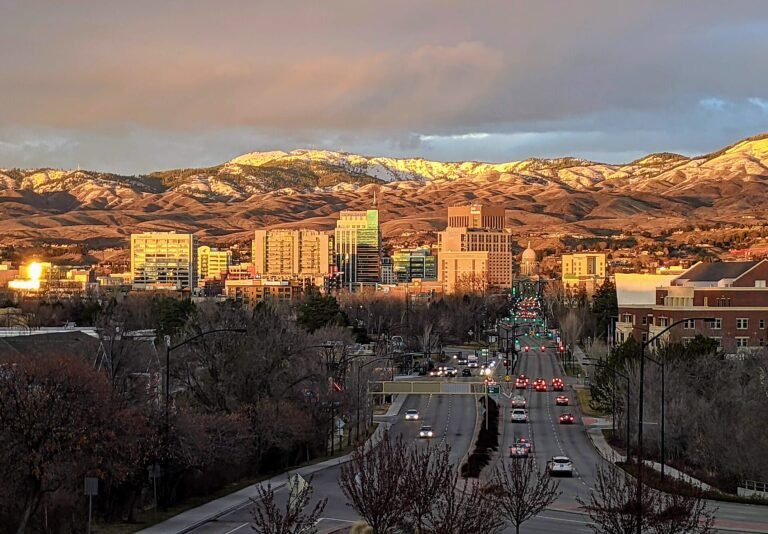
Idaho’s May primary results are reshaping the political landscape ahead of November’s general election, with outcomes in key legislative districts and statewide races signaling a potentially significant shift in the balance of power at the Statehouse and in Idaho’s congressional delegation.
What Happened
Results from Idaho’s 2026 primary elections revealed a divided Republican Party, with some conservative incumbents losing to more ideologically aggressive challengers while others held firm or fell to more establishment-aligned opponents. The picture varied sharply by region.
In North Idaho, two well-regarded Republican legislators — Sen. Jim Woodward and Rep. Mark Sauter of District 1 — were defeated in what observers described as hardball primary campaigns. Meanwhile, in the Magic Valley, two of the Legislature’s more polarizing figures, Sens. Glenneda Zuiderveld and Josh Kohl, lost their races by substantial margins. On the eastern side of the state, mainstream Republicans largely fended off primary challenges from ideologically driven opponents.
One notable development in Kootenai County: Brent Regan, who chairs both the county Republican Party and the Idaho Freedom Foundation, lost his own race for precinct committeeman. That outcome could open the door for more traditional Republicans to gain control of the county’s GOP central committee — a reversal from years of hard-right dominance. A similar shift occurred in Bonneville County during the 2024 primary cycle.
Statewide Races to Watch
Gov. Brad Little drew only 59 percent of the primary vote, leaving him with a competitive general election ahead. He faces Independent candidate John Stegner and Democrat Terri Pickens in November. If both challengers remain on the ballot, Little is favored to secure a third term. If one withdraws, the race becomes significantly more competitive.
In the U.S. Senate race, veteran and businessman Todd Achilles is running as an Independent against incumbent Sen. Jim Risch. Risch has faced criticism for declining to hold open public town halls with constituents. An independent challenger has called on Risch to participate in three public debates ahead of the general election. Risch drew attention for appearing at the groundbreaking ceremony for Micron’s $15 billion Idaho facility — a project enabled by the federal CHIPS Act, which Risch voted against.
In the Attorney General’s race, attorney Lori Hickman is positioned as a potential general election contender against incumbent Raul Labrador. Labrador endorsed several primary candidates who went on to lose, including Zuiderveld, Kohl, and others. Hickman has pledged to run the office as a nonpartisan legal institution focused on constitutional compliance rather than political advocacy.
By the Numbers
- Gov. Little received approximately 59 percent of the Republican primary vote
- District 4 challenger Christa Hazel received 40.5 percent of the vote against incumbent Rep. Elaine Price
- Sens. Zuiderveld and Kohl lost their primaries by what observers described as large margins
- Raul Labrador endorsed at least five primary candidates who were defeated
- Brent Regan lost his race for precinct committeeman in Kootenai County
Zoom Out
The Idaho results reflect a broader national pattern of intra-party Republican tension playing out in primary elections across the country. Nationally, the question of how far right the GOP’s base will pull candidates heading into the general election is a central concern for strategists on both sides.
In Idaho, agricultural communities could play a decisive role in November. Rising costs for fertilizer, diesel, and farm equipment — tied in part to federal tariff policies — have created economic pressure in rural areas that have historically been reliable Republican strongholds. Gov. Little has continued to outraise other statewide candidates in campaign fundraising, though his primary margin suggests the enthusiasm gap may be closing.
What’s Next
All eyes now turn to the November general election, where several statewide races — Governor, U.S. Senate, and Attorney General — are expected to be more competitive than typical Idaho cycles. Whether Independent candidates Achilles and Stegner can consolidate enough non-Republican support to mount serious challenges will likely be the defining question of the fall campaign season.
About the Author