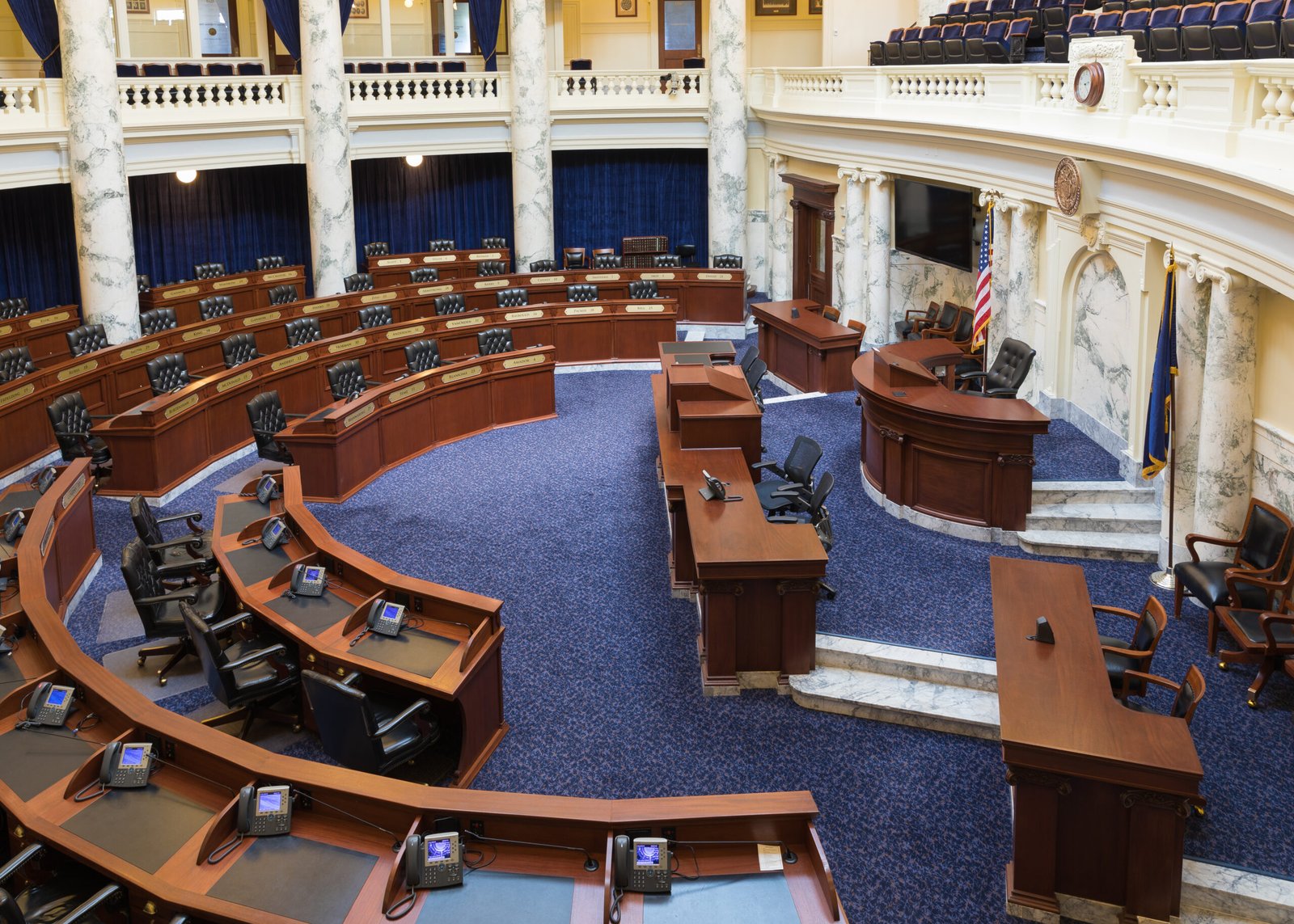
The Idaho House of Representatives chamber in Boise. File photo.
House Joint Resolution 6 asks voters to add a new Section 8 to Article X of the Idaho Constitution. The text would declare English the official language of the state and require that, except as required by federal law, English be used in all public proceedings, public documents, public instruction, and any other public acts of any public institution. Idaho’s official-English statute dates to 2007; it already designates English as the language of government and contains a number of explicit exceptions for public health, safety, education, and other purposes. The constitutional amendment does not simply restate that statute in shorter form. It creates a higher legal requirement whose only stated exception is federal law.
I support a shared civic language. Fluency in English opens doors to employment, jury service, and fuller participation in local government. Many families I know, and many of the parents I talk with, already understand that reality and are working toward it. A common language can strengthen civic life without requiring anyone to abandon the language spoken at home. The question before voters is whether this particular amendment is the right vehicle and whether its reach has been clearly explained.
The amendment’s mandate extends to public instruction and public acts. Ordinary state legislation cannot override a constitutional requirement. Federal obligations remain relevant—voting materials, certain court proceedings, and other mandates under federal law would still apply—but state lawmakers cannot simply write exceptions that contradict the Constitution. Whether existing allowances for dual-language programs, translation of vital public-health information, or foreign-language instruction can continue will depend on legal interpretation of the new text, not on assurances that implementing rules can preserve them. Those implications deserve a clear account before the vote, not afterward.
Schools should continue to support students learning English and to offer foreign-language instruction where it serves educational goals. Agencies should still meet genuine public-safety and health needs. Those are policy preferences I hold. They are not outcomes the amendment’s text guarantees. Voters who favor a common civic language can still ask how the broader requirements will be applied in classrooms, at city counters, and in emergency communications. Supporting English proficiency should go hand in hand with answering those implementation questions honestly.
The existing statute already pointed toward English as the language of official business. Elevating a stricter version to the constitution makes future changes harder and shifts the burden of interpretation to courts and agencies. That is a significant step. Idahoans can decide whether the benefits of constitutional clarity outweigh the uncertainties about scope. The experience of people acquiring English remains valuable either way; it does not resolve the legal questions the amendment raises.
Sources
About the Author