Inside Idaho’s Milt Sparks Holsters: A 55-Year Leather Craft Legacy Built on Patience, Precision, and American Materials
Why It Matters
In an era of mass production and overnight delivery, a small leather shop in Garden City, Idaho is proving that the market for handcrafted quality — and the willingness to wait for it — is alive and well. Milt Sparks Holsters has spent more than five decades building a reputation that stretches far beyond the Treasure Valley, attracting customers who are willing to wait nearly a year for a product made entirely by one set of hands.
The company represents a model of Idaho small business rooted in individual accountability, American-sourced materials, and skills passed down through generations of craftsmen — values increasingly rare in today’s economy.
What Happened
Nick Harvey and Leslie Frederiksen, co-owners of Milt Sparks Holsters, along with partners Jim Wall and Scott Kubik, purchased the Garden City business in 2017 from its second owner, Tony Kanaley. The company has operated continuously for more than 55 years, tracing its origins to a World War II-era leather hobby that founder Milt Sparks parlayed into one of the most respected holster brands in the country.
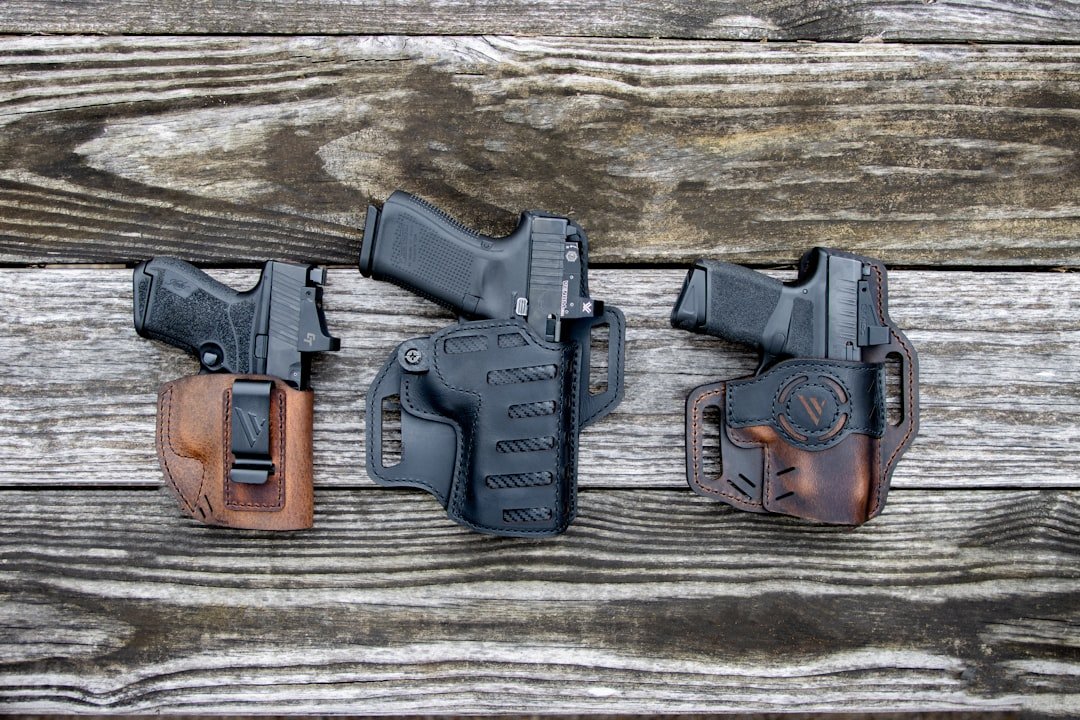
The business remains deliberately small and hands-on. Every holster produced at the Garden City shop is built entirely by one craftsman — from the first cut of cowhide to the final burnish — and each finished piece carries the initials of the person who made it. That level of individual ownership and craftsmanship is central to the company’s identity.
Harvey, who joined the company in 2000, has acknowledged there is room to scale the operation. The demand clearly exists. He has chosen not to pursue rapid expansion, prioritizing quality and craft over volume — a deliberate business philosophy that has kept customers loyal and the backlog growing.
The Origin Story
The Milt Sparks story begins during World War II, when Bonnie Sparks purchased a handicraft kit to make a leather purse while her husband, Milt, flew Navy planes. When Milt returned home, he picked up the craft himself, eventually making flight bags for fellow pilots. By the late 1960s, what had started as a wartime hobby had grown into a business, first in Star, Idaho, and later in Idaho City.
The company’s national profile grew significantly in 1976 when Milt Sparks became involved with Col. Jeff Cooper, the legendary firearms instructor credited with shaping modern pistol technique and helping establish what became IPSC competitive shooting. Sparks holster designs were used in those early competitions, and word spread quickly among serious shooters.
Craftsman Tony Kanaley joined the shop in the 1980s, became shop manager, and eventually purchased the company from Sparks in 1990. Milt Sparks passed away in 1995, but the business he built endured. Harvey came aboard in 2000, and when Kanaley retired, Harvey and colleagues Wall and Kubik completed their purchase in 2017. Wall has been with the company since the mid-1990s, and Kubik has been there nearly 28 years.
“We all have quite a bit of institutional knowledge in that regard,” Harvey said.
By the Numbers
- 55+ years in continuous operation, founded in the late 1960s
- 10-month backlog on custom holster orders, with no apparent decline in demand
- 2017 — the year Harvey, Frederiksen, Wall, and Kubik completed their purchase of the business
- 2 primary leather suppliers — Herman Oak in St. Louis and Horween Leather in Chicago, both American tanneries
- 28 years — the approximate tenure of partner Scott Kubik with the company
Zoom Out
Milt Sparks Holsters operates within a broader national conversation about the value of American manufacturing and skilled trades. As education and workforce policy debates continue to shape Idaho’s economic future, companies like Milt Sparks represent the kind of trade-skill economy that depends on workers willing to invest months learning a craft before they are trusted to sign their name to a finished product.
The holster market itself has shifted dramatically toward polymer and injection-molded products that can be manufactured at scale and delivered overnight. Milt Sparks has resisted that trend entirely. All leather, thread, dyes, and adhesives are American-sourced, and the production process — cutting, stitching, wet-molding to a specific firearm, pressing, hand-detailing, and burnishing — cannot be compressed by software or automated away.
Harvey has spotted his own work listed on eBay years after it left the shop, tagged as vintage. It still had his initials on it.
“People are willing to wait,” Harvey said. “They’ll say, ‘I’ve heard about your product and I’m willing to wait.’ That’s worked out really well for us.”
What’s Next
Milt Sparks Holsters shows no indication of departing from its current model. The 10-month backlog remains, demand continues to outpace capacity, and ownership has made a deliberate choice to prioritize craft over scaling. For a company whose Idaho business community presence spans more than half a century, the next chapter appears to look much like the last — one holster, one craftsman, one set of initials at a time.
About the Author