What the Supreme Court Heard Tuesday
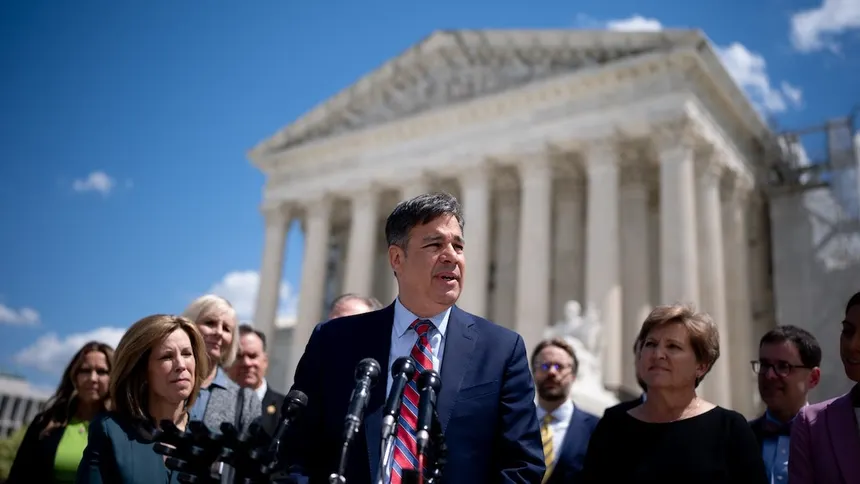
The US Supreme Court heard more than three hours of arguments in two cases challenging state laws that restrict transgender students from competing on sports teams aligned with their gender identity.
The disputes involve laws in Idaho and West Virginia. The cases center on how sex-based team separation under Title IX and the Constitution’s equal protection principles apply in school athletics.
A decision is expected by the end of June.
Key Questions From Conservative Justices
Several conservative justices signaled receptiveness to arguments supporting state authority to separate sports teams by sex.
Justice Brett Kavanaugh raised concerns about what he described as harm to girls and women’s sports when transgender-inclusive policies are used. He cited scenarios involving roster spots, medals, and awards.
Chief Justice John Roberts expressed skepticism about creating what he called a transgender “exception” to sex-based laws. He also suggested that a major 2020 workplace decision involving sex discrimination may not directly control these sports cases.
The 2020 Precedent at the Center of the Debate
The challengers argued that the Supreme Court’s 2020 decision in Bostock v. Clayton County supports their position. That case held that workplace discrimination based on transgender status is discrimination “because of sex.”
During arguments, Roberts questioned whether a law that classifies based on sex necessarily amounts to a classification based on transgender status. West Virginia’s lawyer agreed with that framing.
Justice Neil Gorsuch, who authored the Bostock opinion, asked early questions about whether transgender Americans have a history of discrimination that would justify heightened scrutiny.
Liberal Justices Press Idaho and West Virginia
The court’s liberal justices questioned whether the state bans draw lines based on sex and transgender status, and how those lines should be evaluated under equal protection principles.
Justice Sonia Sotomayor challenged Idaho’s position and said the state’s reasoning did not make sense to her. She also posed a hypothetical asking whether a ban could be justified if science showed no athletic difference between transgender and cisgender women.
Sotomayor also criticized the court’s recent pattern of adopting views previously expressed in dissents in other cases.
The Plaintiffs in the Idaho and West Virginia Cases
The two transgender plaintiffs are:
- Lindsay Hecox, an Idaho student challenging the Idaho law
- Becky Pepper-Jackson, a West Virginia student challenging the West Virginia law
Hecox previously sought to end her case, saying she no longer intended to compete in athletics and describing personal and academic strain, including negative attention tied to the litigation. The Supreme Court deferred that request until after oral arguments.
Sotomayor raised questions about whether Hecox’s case should be considered moot, noting she will graduate in May, potentially before the court rules.
Who Argued Before the Court
Attorneys presenting arguments included:
- Kathleen Hartnett, representing Lindsay Hecox
- Michael Williams, West Virginia’s solicitor general defending that state’s law
- Joshua Block, an attorney arguing on behalf of Becky Pepper-Jackson
- Hashim Mooppan, a Justice Department attorney arguing for the Trump administration, which sided with the states supporting the bans
Mooppan told the court it is undisputed states may separate sports teams based on sex because of biological differences, and argued states may apply those rules to biological males who identify as female.
Title IX and Potential Broader Impacts
Kavanaugh asked whether states that allow transgender athletes to compete consistent with gender identity could be violating Title IX rights of biological females. West Virginia’s lawyer said there is room under the law for states to reach different conclusions, and suggested the court need not resolve that question in these cases.
The Trump administration has threatened to cut off federal funding for schools that allow transgender athletes to compete under such policies, based on its interpretation of Title IX. The source material also notes at least one state has filed suit seeking to protect federal funding.
Demonstrations Outside the Supreme Court
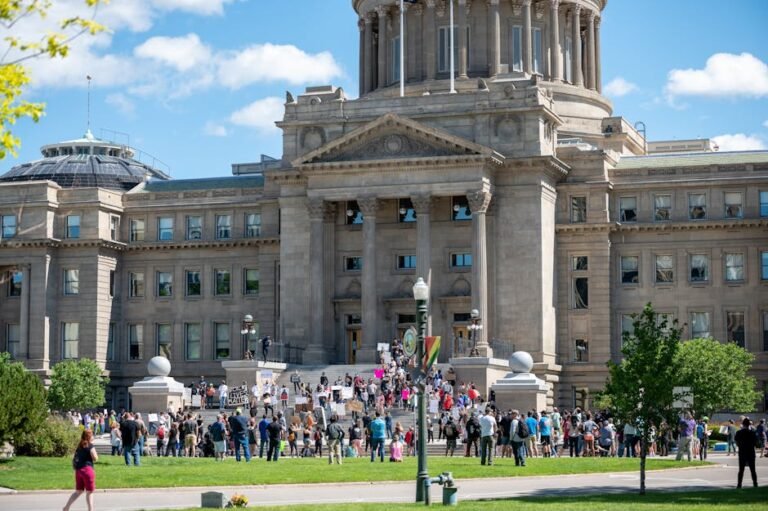
Hundreds of peaceful demonstrators gathered outside the court during the arguments.
Some carried signs supporting the bans, including messages such as “Protect women’s sports.” Others carried signs supporting transgender participation and broader transgender rights.
Why These Cases Matter Nationally
The court is reviewing laws from Idaho and West Virginia, but similar bans exist in more than half of US states, according to the source material. Those laws generally seek to bar transgender women and girls from competing on girls teams in public K–12 schools and, in some states, colleges and universities.
Idaho enacted the first such law in 2020, and similar efforts spread in subsequent years.
Related Coverage
- Idaho News – https://idahonews.co/idaho-news-3/
- National News – https://idahonews.co/national-news/
- Global News – https://idahonews.co/global-news/
About the Author