Federal Appeals Court Lifts Restrictions on Officers’ Use of Tear Gas at Portland ICE Facility
Why It Matters
A federal appeals court ruling is reshaping how law enforcement can respond to ongoing protests at a Portland, Oregon, Immigration and Customs Enforcement facility — with direct consequences for officers’ ability to maintain order, nearby residents, and the broader debate over the limits of judicial oversight of federal law enforcement operations.
The decision affects not only the protesters and journalists who have gathered outside the facility for months, but also residents of an affordable housing complex adjacent to the site who say chemical agents have seeped into their homes.
What Happened
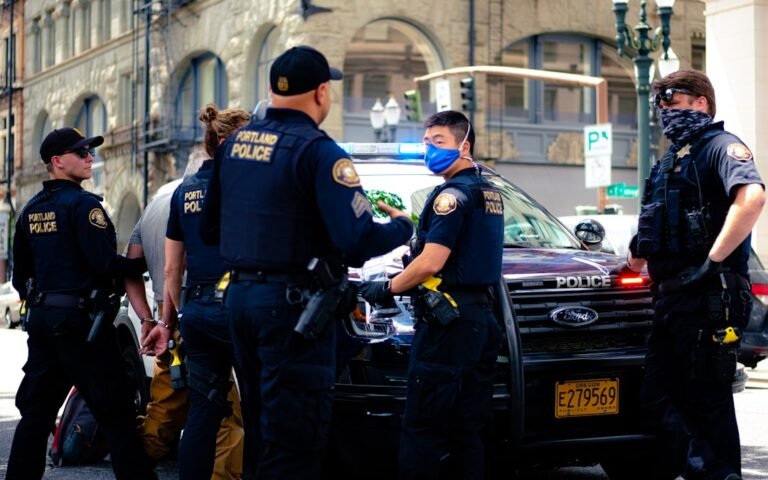
Two of three judges on a 9th Circuit Court of Appeals panel ruled Monday that federal agents at the Portland ICE facility should not be restricted in their use of force and munitions against protesters and journalists gathered outside the building.
The majority opinion was written by Judge Kenneth Lee and joined by Judge Eric Tung — both Trump appointees. Their ruling covered two separate cases against the federal government: Dickinson v. Trump and Reach Community Development, et al. v. United States Department of Homeland Security, et al.
The panel’s third member, Judge Ana de Alba — a Biden appointee — dissented, arguing the federal government had not demonstrated it suffered irreparable harm from the lower court orders that had temporarily restricted agents’ use of force while the underlying cases were pending.
It is the second time Tung and Lee have moved to temporarily overturn lower court restrictions on the use of such munitions at the facility.
The Core Legal Dispute
Plaintiffs in both cases allege that federal agents at the Portland ICE facility targeted protesters and journalists who posed no threat to officers, causing irreparable medical harm to nearby residents unable to escape chemical exposure in their homes. The majority ruling also found that residents have “no such right” under the U.S. Constitution “to be free of exposure to chemicals that were released when federal law enforcement officers used tear gas and other non-lethal devices to disperse the crowds.”
Lawyers for the federal government argued the building was “under siege” and that the munitions are “a critical defensive law enforcement tool.” Writing for the majority, Lee said the temporary restrictions would cause officers to hesitate before enforcing federal law — a concern the majority found unacceptable given the ongoing nature of the protests.
In her dissent, de Alba argued the federal government had successfully defended the facility while the temporary restraining orders were in effect, and that evidence showed officers at times deployed chemical munitions in situations “disconnected from any law enforcement purpose” — including, she noted, for use in government social media content.
By the Numbers
- 30 Oregon labor unions organized a march near the Portland ICE facility on January 31, 2026
- 2 separate federal lawsuits are pending against the government over officers’ conduct at the facility
- 2 of 3 appeals court judges sided with the federal government in Monday’s ruling
- Protests outside the facility have been ongoing since June 2025
- This marks the second time the same two-judge majority has overturned lower court restrictions on the use of force at the site
Zoom Out
The ruling fits into a broader national pattern of federal courts wrestling with how much latitude law enforcement should have when managing sustained protest activity near federal facilities. The protests in Portland escalated significantly in the fall after President Donald Trump moved to deploy National Guard troops to the city, and again in late January following a large afternoon march that included children, seniors, and people with disabilities.
The Pacific Northwest has been a recurring flashpoint for clashes between protest groups and federal law enforcement, and Monday’s ruling signals that at least some federal appellate judges are inclined to preserve officers’ operational discretion rather than allow lower courts to impose use-of-force restrictions while litigation is pending. For more on Oregon’s evolving political landscape, see our recent coverage of rural Oregon Democrats competing to unseat U.S. Rep. Cliff Bentz.
What’s Next
Both underlying cases — Dickinson v. Trump and the Reach Community Development suit — remain active in the lower courts. The full merits of the plaintiffs’ claims regarding excessive force and constitutional violations have not yet been adjudicated.
Monday’s ruling addressed only whether temporary restrictions on agents should remain in place during litigation, not the ultimate question of whether officers’ conduct was lawful. Legal observers expect the cases to continue moving through the federal court system, with the possibility that findings from the district court could eventually return to the 9th Circuit for further review. Oregonians tracking state regulatory enforcement can also follow the recent $3.2 million fine against Pacific Seafood for water pollution violations as another example of federal and state oversight intersecting in the region.
About the Author